Project progressing

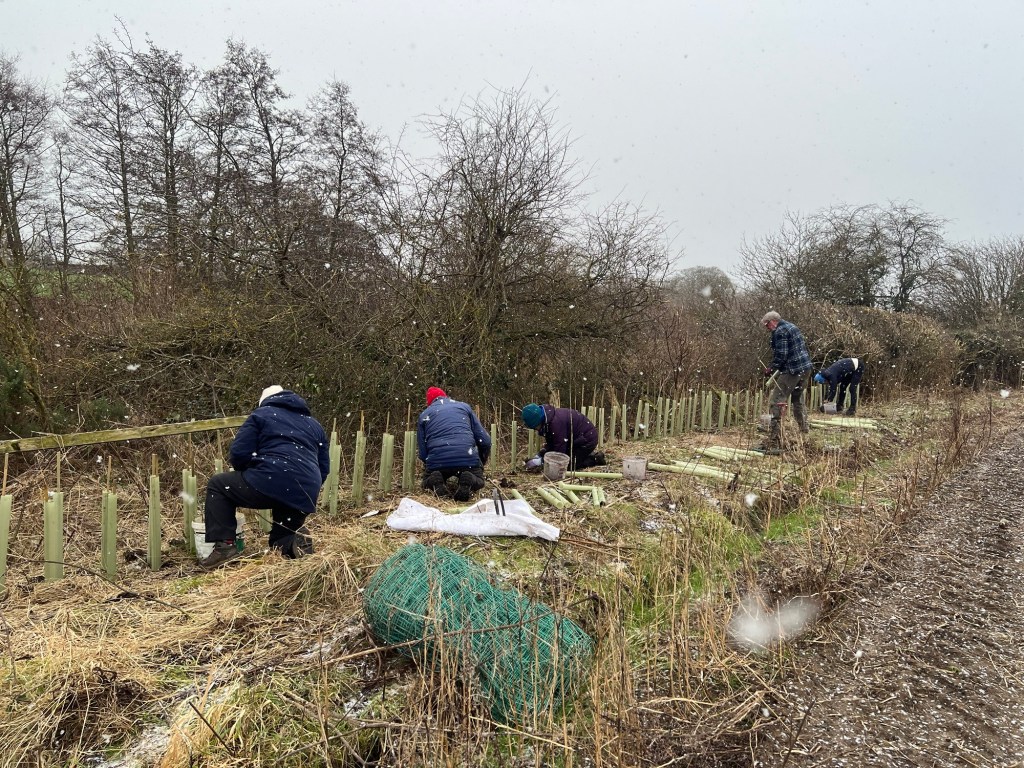
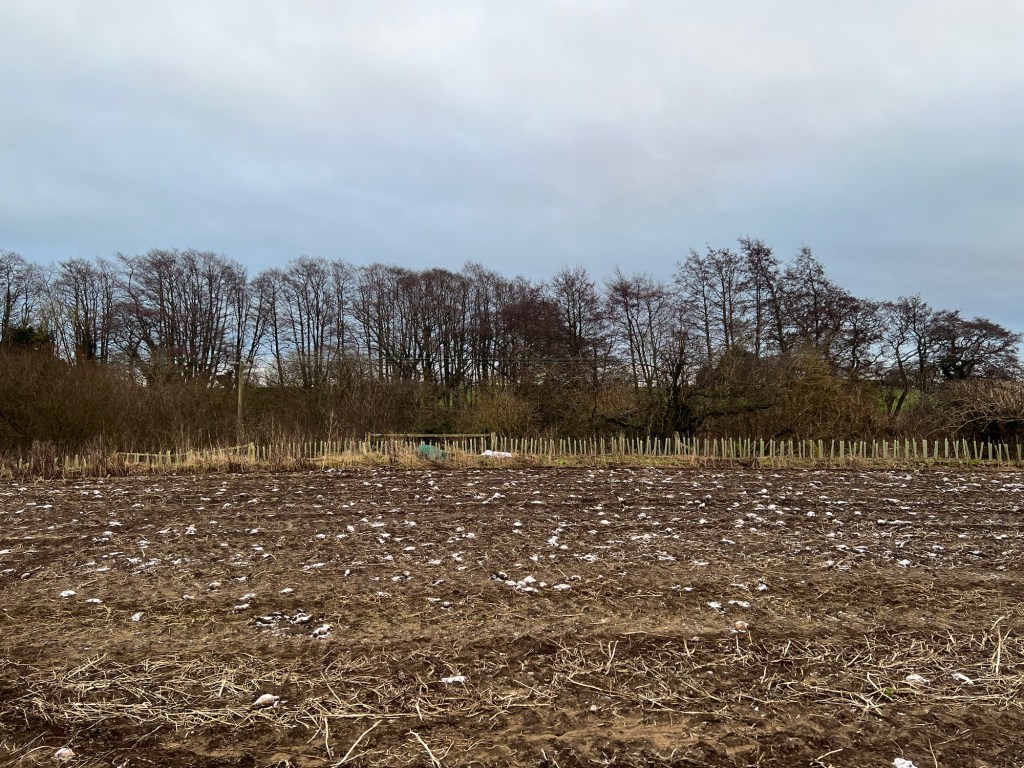
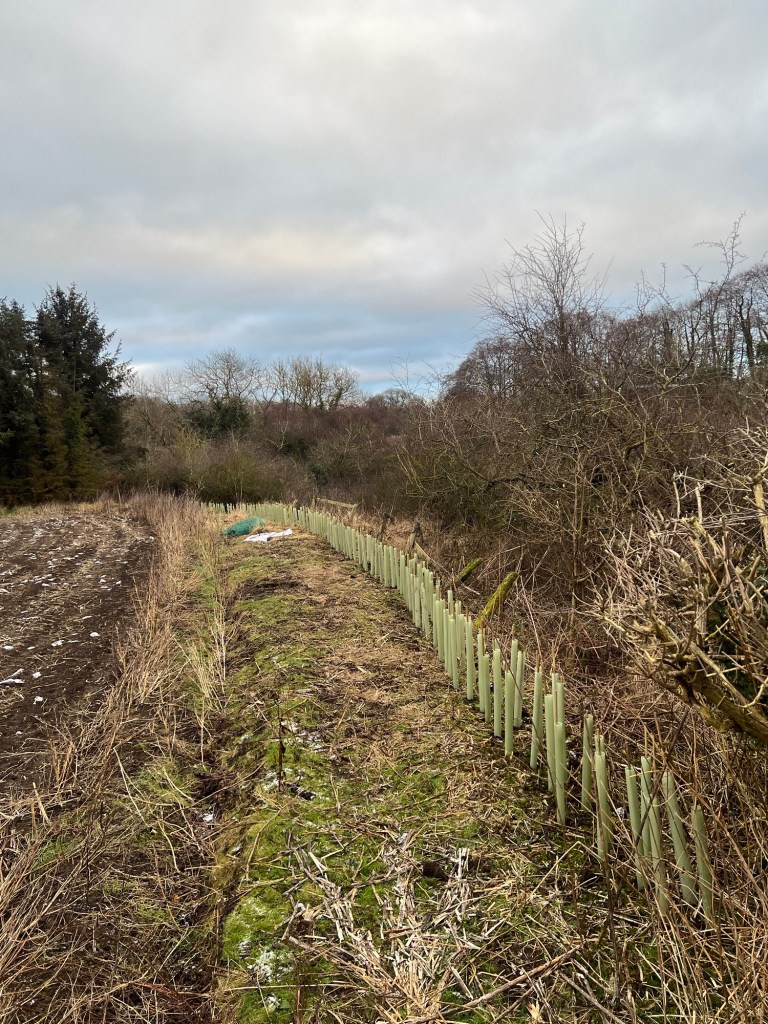
Well the hedge planting is in full flow and we are past the halfway mark. My fencer (Geoff Watson) has started work and we should have the fence at the bottom of Dunces field completed in the next couple of days.

Progress has been slower than hoped due to the constant rain so the last couple of days have been a boost.

Kick off on plant off

Many thanks to the Morpeth scouts and explorers that volunteered at the weekend to start our hedge planting project.

We had four groups over Saturday and Sunday and they planted just over 1000 hedge plants. Libby organised the planting sequences which helped for a smooth operation.

Thanks to the scout/explorer leaders Dom, Sam & Rod who led the groups.

Only another 3500 to go!

Ready for the big plant off

My hedge plants arrived on schedule courtesy of Cheviot trees:-

You can get 4500 trees on a single pallet, who knew!

We have 9 different plants to make up our wildlife hedges.

We have hawthorn, blackthorn, buckthorn, dogwood, dog rose, elder, wild cherry, bird cherry, and holly.

Libby and I have been working out the planting mix, preparing the ground and we start tomorrow, with help from the Morpeth Scouts amongst others.

First of two rows pegged out

Ringing endorsement

An early start today for our latest bird ringing session.

Sunrise over Clarks Bog

We had a good session today with, we ringed 65 birds which is higher than usual.
Our list included blue tits, coal tits, great tits, dunnock, tree sparrows, wren, goldfinch, goldcrest, song thrush, robins, blackbirds, and reed bunting, so not a bad variety.

Here is a couple of reed bunting, male on the left female on the right, pretty little birds when you see them up close.

Reed Bunting

Fungi fest

It’s that time of year when the fungi are bursting out all over. I’m no expert on fungi but here are a few I spotted the other day.

Jellied ear
Puffball

If any experts out there want to name them?

Help Required

OOps! I got my dates mixed up, the hedge plants arrive on 14/15th November so it would be the following weekend – 18/19th November that I would be planning to start planting. Sorry for the confusion. If anyone does want to get involved please either text or ring me on 07739421562 or email me at matthewson93@gmail.com.

I – have received notification that my hedging plants will be delivered this coming week. So my plan would be to try and plant them next weekend (weather permitting). If there is anyone out there that could spare some time to do a little planting that would be a big help, as we have several thousand plants to put in.

I have been trying to do a little preparation prior to planting and have been trying to clear where the hedging is going in.

BEFORE
AFTER
BEFORE
AFTER

Still a bit more to do (about 100 metres).

A Cut Above The Rest

Our small area of willow plantation, next to the classroom, is getting a makeover. I have decided to try and improve the habitat and biodiversity in that area. The willow trees had not been managed previously and consequently had grown as mainly high spindly trees. This meant very little plant growth below and almost no bird nesting or activity in the area.

I have started to coppice the central area to increase the light in that area and hopefully the coppiced tress will grow back as much bushier and useful habitat. Time will tell.

Here are a few pictures of our progress.

WET WET WET

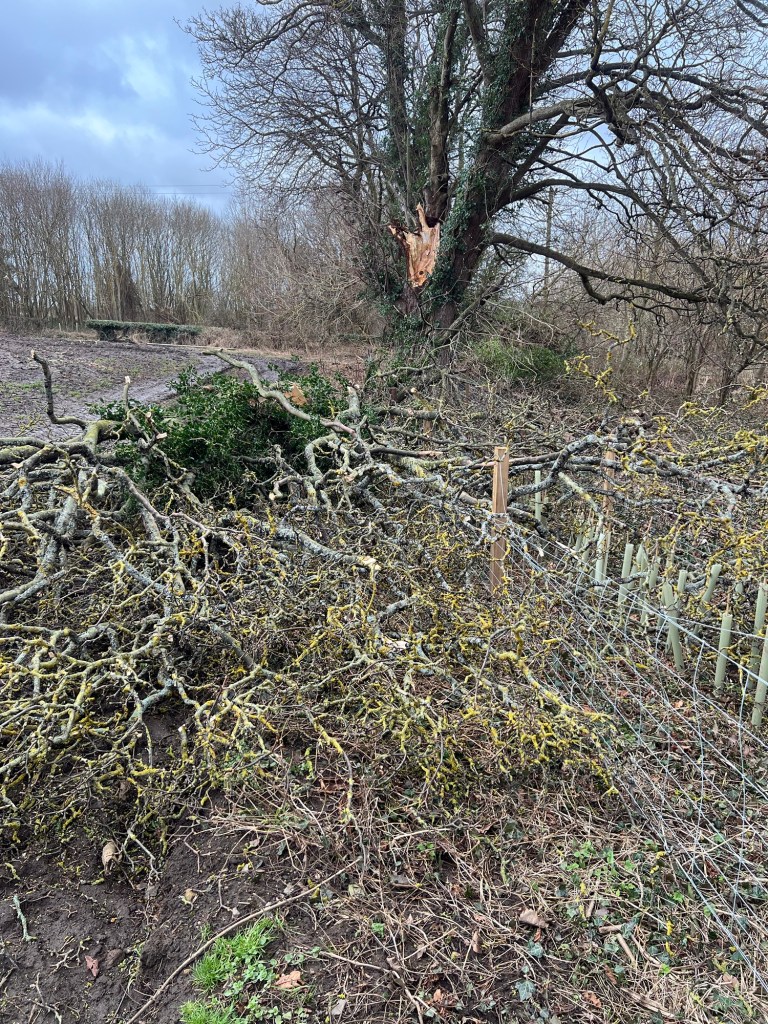
I don’t suppose I need to mention its been a little damp recently, with storm Babet and the weather this week.

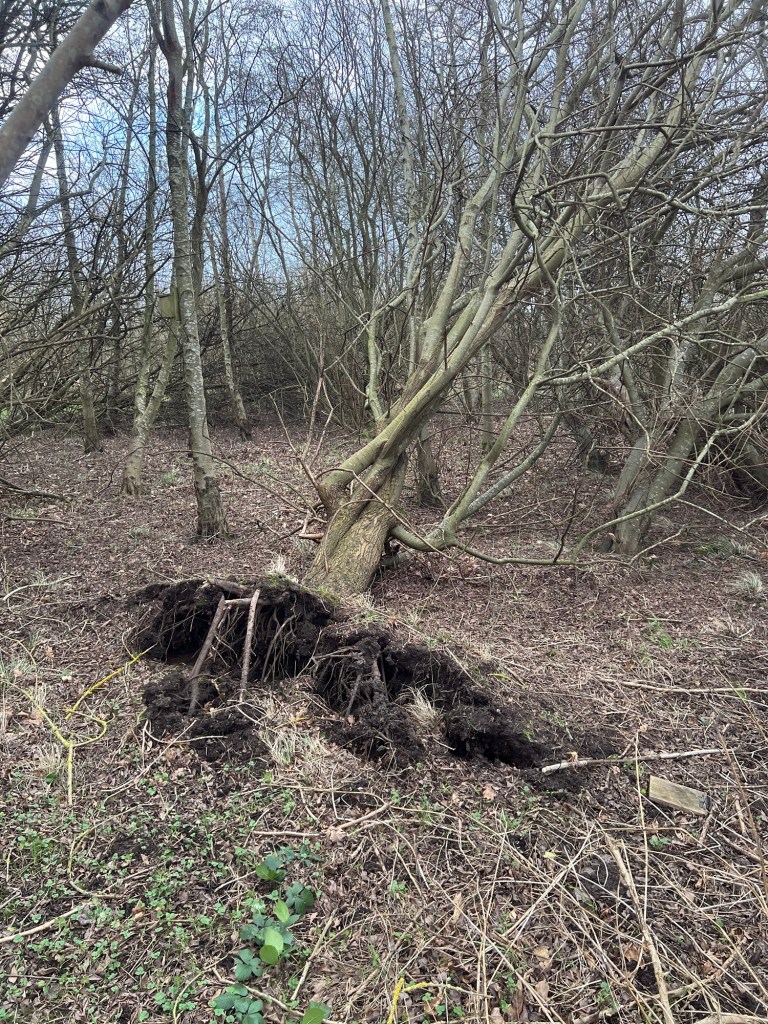
We have had a couple of trees down, a willow and a large Alder.

A number of paths are under water which I have not seen before and with more rain on the way I may need to use my canoe on the paths as well as the ponds!

New Visitor

We have had a new bird appear at Dunces Corner Pond two days out of the last three. Although a Cormorant is not not a rare bird it was the first time I have seen one on the reserve, perhaps it means we have a few fish now appearing in the pond.

Cygnet Rings

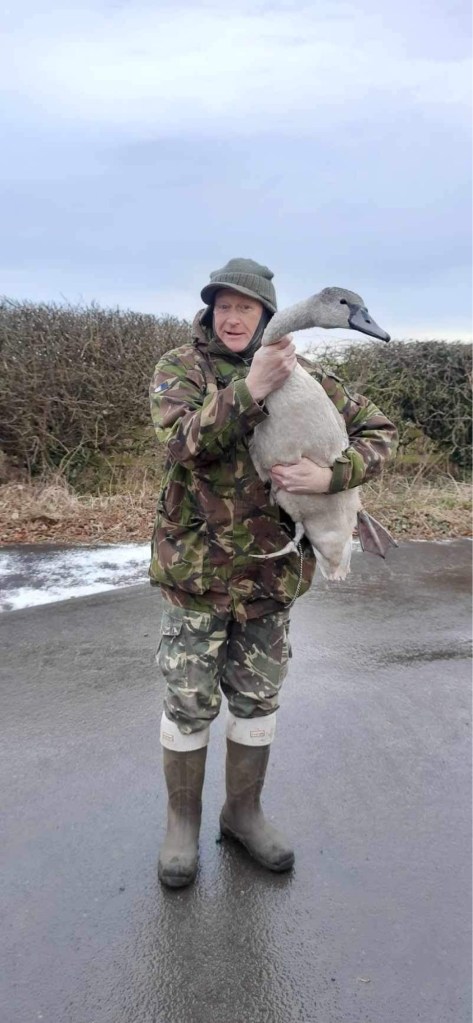
Many thanks to the bird ringing crew that arrived on Sunday to help capture and ring our cygnets. There were twice as many bird ringers as cygnets but it takes two per cygnet to do the ringing properly.

We managed to ring 4 out of 5 cygnets, one was a little tinker and managed to escape our clutches. We will have to catch them later.

Over the next few months the cygnets will be moving out of the reserve and with the coloured rings it will be easier for these to be read. Hopefully we will get reports back as to where our cygnets end up. You will notice on the picture above there are rings on both legs, the metal ring has the ‘normal’ ringing number, the coloured ring is for easier recognition from distance.

The youngsters are growing quickly and are looking like proper swans.

I would ask that if you see one of these young swans with the coloured rings in the future please let me know or report it on the BTO website. This data is really useful for monitoring swans activity.

Nature reserve construction and development